Beyond Scissors: Explore Other Essential Left-Handed Craft Tools

By Mike Southpaw · Left-Handed Tool Tester
Published June 22, 2026 · Last reviewed June 22, 2026
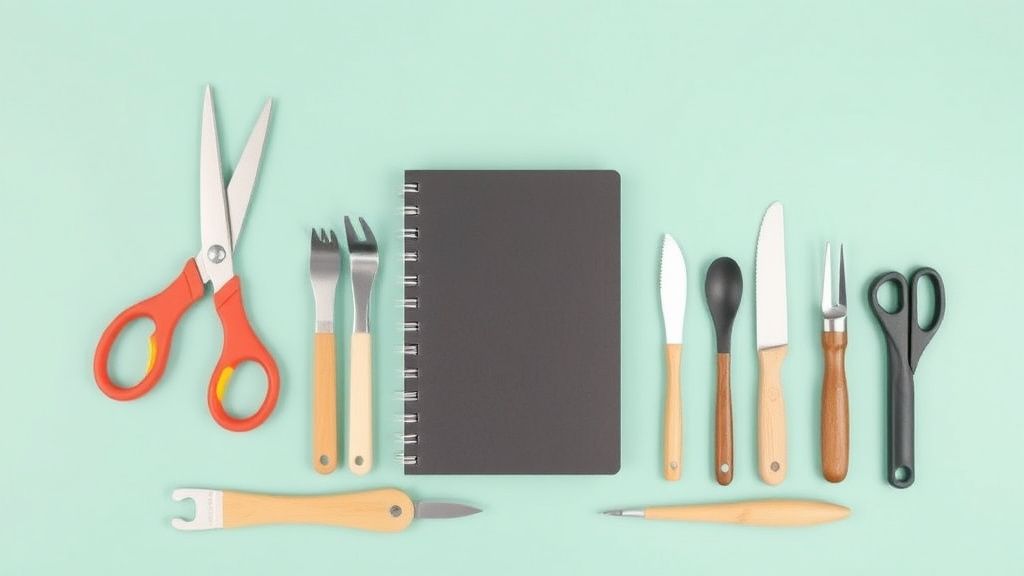
Why Left-Handed Crafters Need Specialized Tools
Left-handed crafters often struggle with right-handed tools, leading to frustration, imprecise cuts, and even discomfort. While left-handed scissors are well-known, many other craft tools are designed with right-handed users in mind, making tasks like cutting, measuring, and carving more difficult for lefties. Fortunately, specialized left-handed versions of these tools exist—they improve control, reduce strain, and enhance overall crafting efficiency.
Here’s a deep dive into essential left-handed craft tools beyond scissors that can make a real difference in your projects.
Left-Handed Rotary Cutters
Rotary cutters are indispensable for quilters, sewists, and paper crafters, but standard models are often designed for right-handed users. Left-handed rotary cutters feature:
- Blade orientation – The blade is positioned to provide optimal visibility and control when cutting from left to right.
- Ergonomic handles – Contoured grips reduce wrist strain during prolonged use.
- Safety locks – Some models include ambidextrous or left-handed locking mechanisms for easier one-handed operation.
Best for: Fabric cutting, scrapbooking, and precision paper crafts.
Left-Handed Craft Knives & Precision Blades
Exacto knives and precision blades are common in model-making, stencil cutting, and detailed paper crafts. Right-handed versions can obscure the cutting line for lefties. Left-handed craft knives address this with:
- Angled blades – Designed to improve visibility when cutting left to right.
- Reversible grips – Some models allow blade adjustment for better left-handed control.
- Non-slip handles – Prevent slipping during intricate cuts.
Best for: Detailed cutting, stencil work, and model assembly.
Left-Handed Rulers & Measuring Tools
Measuring accurately is harder when ruler markings are obscured by your hand. Left-handed rulers solve this problem with:
- Reversed numbering – Measurements run right to left for natural left-handed use.
- Non-slip backing – Prevents shifting while marking or cutting.
- Clear or raised edges – Improves visibility when aligning cuts.
Best for: Sewing, quilting, woodworking, and drafting.
Left-Handed Embroidery & Sewing Tools
Embroidery hoops, needles, and sewing gauges can be awkward for left-handed users. Look for:
- Adjustable hoops – Some models allow repositioning for left-handed stitching.
- Left-handed sewing gauges – Markings are oriented for easy left-handed reading.
- Ergonomic needle grips – Reduce hand fatigue during detailed hand-sewing.
Best for: Hand embroidery, cross-stitch, and garment repair.
Left-Handed Hole Punches
Standard hole punches eject waste to the left, making it harder for left-handed users to see where they’re punching. Left-handed versions feature:
- Waste ejection on the right – Ensures clear visibility of punch placement.
- Centered alignment guides – Helps position paper accurately.
- Lever mechanisms – Some models have reinforced hinges for smoother left-handed operation.
Best for: Bookbinding, scrapbooking, and office crafts.
Left-Handed Crochet Hooks & Knitting Needles
Crochet and knitting require repetitive motions that can strain the wrists if tools aren’t ergonomic. Left-handed versions include:
- Tapered grips – Designed to fit comfortably in a left-handed grip.
- Smooth joins – Prevents yarn snagging when working left to right.
- Flexible cables (for knitting needles) – Allows smoother left-handed circular knitting.
Best for: Fiber arts, amigurumi, and garment-making.
Left-Handed Calligraphy & Brush Pens
Ink flow and nib shapes in calligraphy pens are often optimized for right-handed strokes. Left-handed alternatives feature:
- Oblique or left-handed nibs – Prevent smudging and improve ink flow.
- Fast-drying inks – Reduce smearing when writing left to right.
- Angled brush tips – Better control for left-handed brush lettering.
Best for: Hand lettering, illustration, and journaling.
What to Look for in Left-Handed Craft Tools
When shopping for left-handed craft tools, consider:
- Ergonomics – Look for contoured grips and reduced strain designs.
- Visibility – Ensure markings, blades, or guides are positioned for left-handed use.
- Adjustability – Some tools (like rotary cutters) can be modified for left-handed operation.
- Material Quality – Durable blades, non-slip surfaces, and smooth mechanisms matter.
- User Reviews – Check feedback from other left-handed crafters for real-world performance.
Investing in the right tools can transform your crafting experience—no more fighting against right-handed designs. With these specialized options, left-handed crafters can work more comfortably, precisely, and efficiently.