Discovering the Ideal Left-Handed Notebook for Students and Professionals

By Mike Southpaw · Left-Handed Tool Tester
Published June 22, 2026 · Last reviewed June 22, 2026
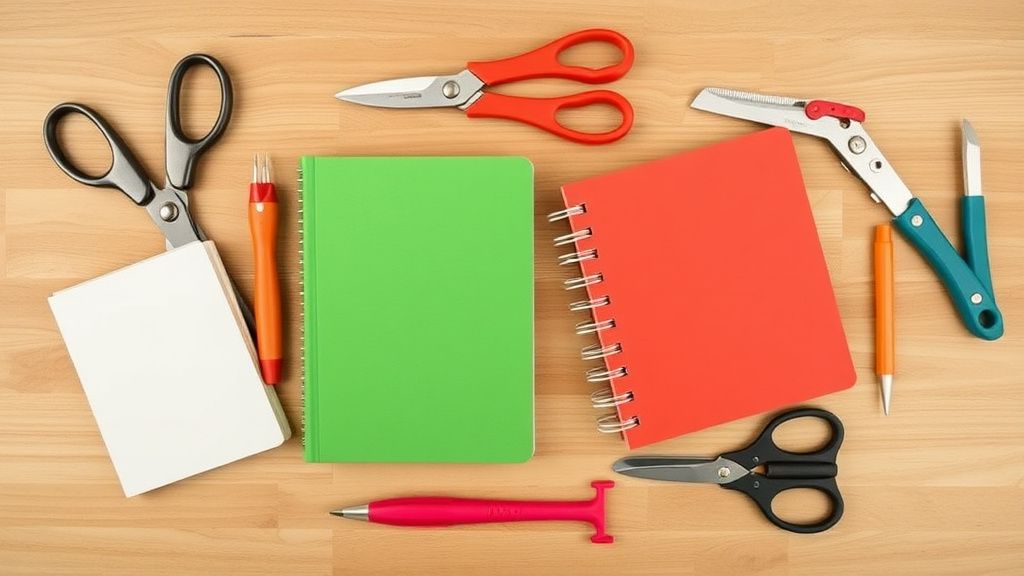
Why Left-Handed Notebooks Matter
For left-handed students and professionals, writing in a standard notebook can be frustrating. Spiral bindings dig into the wrist, ink smudges as the hand drags across the page, and side-bound notebooks force awkward hand positioning. Left-handed notebooks address these issues with thoughtful design, making writing smoother and more comfortable.
Key Features of a Left-Handed Notebook
1. Binding Placement
Most notebooks have left-side bindings, forcing left-handed writers to contort their hands or press against the spiral. Ideal left-handed notebooks feature:
- Right-side or top binding – Eliminates interference with the writing hand.
- Lay-flat or stitched binding – Allows the notebook to stay open without pressure.
2. Paper Layout for Smudge-Free Writing
Left-handed writers often drag their hands over freshly written ink or graphite. Look for:
- Fast-drying paper – Minimizes smudging with gel pens or fountain pens.
- Perforated sheets – Lets lefties remove and reposition pages for easier writing angles.
- Grid or dot-grid paper – Helps maintain straight lines without ruled margins that may not suit left-handed writing posture.
3. Cover and Spine Durability
Left-handed users flip pages from the opposite side, which can strain weak bindings. A sturdy notebook should have:
- Reinforced spine – Prevents cracking with frequent right-to-left flipping.
- Flexible yet durable cover – Withstands being held open at unconventional angles.
Types of Left-Handed Notebooks
1. Spiral-Bound Notebooks (Right-Sided)
- Best for: Students taking quick notes or professionals who prefer flipping pages freely.
- Advantage: No center crease, but ensure the spiral is tightly wound to avoid snagging.
2. Top-Bound Notebooks
- Best for: Artists, architects, or anyone who works on flat surfaces.
- Advantage: No binding interference on either side, ideal for left- or right-handed users.
3. Stitched or Lay-Flat Notebooks
- Best for: Journaling or long writing sessions.
- Advantage: Lies completely flat without pressure, reducing hand fatigue.
4. Perforated or Detachable Sheets
- Best for: Professionals who need to reorganize notes or submit pages individually.
- Advantage: Lets left-handed users remove pages and write at a natural angle.
Specialty Notebooks for Left-Handed Users
1. Calligraphy or Fountain Pen-Friendly Notebooks
- Look for: Thick, ink-resistant paper to prevent bleed-through and smudging.
2. Sketchbooks for Left-Handed Artists
- Look for: Toned or mixed-media paper with a sturdy backing board for support when drawing.
3. Academic or Lab Notebooks
- Look for: Numbered pages with a right-side binding for easy left-handed notation.
What to Look for When Buying a Left-Handed Notebook
Before purchasing, consider these practical tips:
- Test the Binding – If possible, simulate writing to ensure the binding doesn’t obstruct your hand.
- Check Paper Weight – 80gsm or higher reduces show-through; 100gsm+ is ideal for ink-heavy use.
- Look for Smudge-Resistant Coatings – Some papers have coatings that speed up drying time.
- Prioritize Lay-Flat Design – Essential for comfort during long writing sessions.
- Consider Perforations – Useful if you frequently tear out pages or adjust your writing angle.
Final Thoughts
A well-designed left-handed notebook eliminates common frustrations, making writing more efficient and enjoyable. Whether you’re a student racing through lecture notes or a professional drafting detailed reports, the right notebook can make all the difference. Focus on binding placement, paper quality, and durability to find the perfect fit for your needs.