How to Adapt Right-Handed Tools for Left-Handed Use

By Mike Southpaw · Left-Handed Tool Tester
Published June 22, 2026 · Last reviewed June 22, 2026
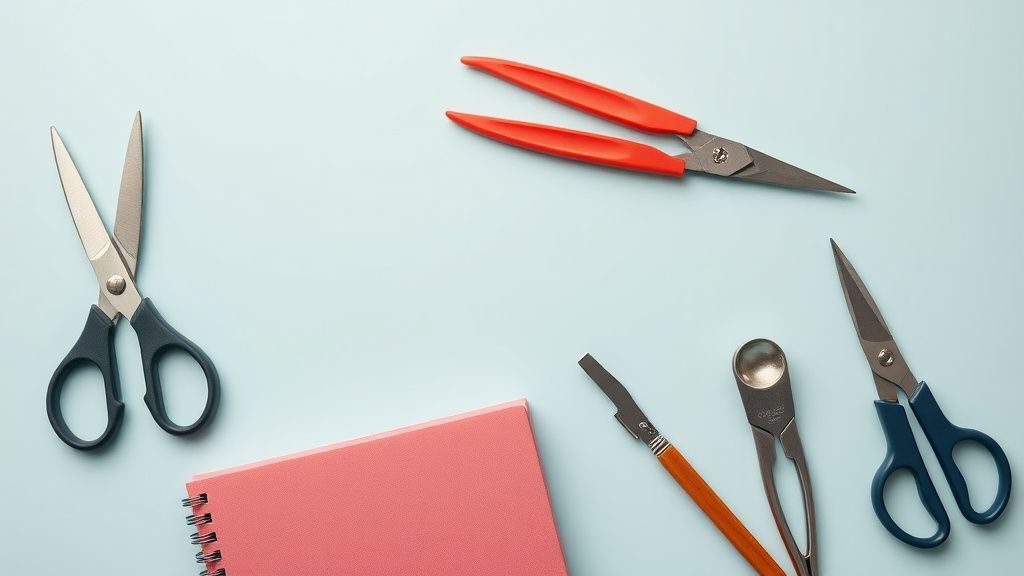
How to Adapt Right-Handed Tools for Left-Handed Use
Left-handed individuals often struggle with right-handed tools, which can feel awkward, inefficient, or even unsafe to use. While specialized left-handed tools exist, they aren’t always readily available or affordable. Fortunately, many right-handed tools can be adapted for left-handed use with some adjustments. This guide explores practical solutions for modifying common tools and highlights key features to look for when shopping for left-handed alternatives.
Understanding the Challenges of Right-Handed Tools
Most tools are designed with right-handed users in mind, featuring:
- Asymmetrical grips that fit comfortably in the right hand but strain the left.
- Blade or edge orientation (e.g., scissors, can openers) that only work efficiently when used right-handed.
- Control placement (e.g., power tool switches, measuring tape markings) positioned for right-handed access.
Left-handed users may compensate by using tools in unnatural positions, leading to discomfort, reduced precision, or even injury. Adapting these tools can improve ergonomics and performance.
Adapting Common Right-Handed Tools
Scissors
Right-handed scissors have blades aligned so the top blade is on the right side, forcing left-handed users to push the blades apart instead of cutting smoothly.
Adaptation Tips:
- Look for ambidextrous scissors with symmetrical blades and finger holes.
- If using right-handed scissors, hold them upside down (with the thumb in the larger hole). This changes the blade orientation but may feel awkward.
- Resharpening right-handed scissors for left-handed use is possible but requires a professional.
Can Openers
Most manual can openers require a clockwise turning motion, which is easier for right-handed users.
Adaptation Tips:
- Use a side-cutting can opener, which operates with a straight downward motion rather than rotation.
- Electric can openers are often ambidextrous since they automate the process.
Measuring Tools
Tape measures and rulers often have markings starting from the left, making them harder to read when held in the left hand.
Adaptation Tips:
- Look for double-sided tape measures with markings on both edges.
- Use a left-handed ruler with reversed numbering or a center-start design.
Power Tools
Many power tools have safety switches, handles, or cord placements designed for right-handed users.
Adaptation Tips:
- Check if the tool has a reversible handle or switch placement.
- For circular saws, look for models with blade visibility from the left side.
- Use clamps or stands to stabilize workpieces, reducing reliance on dominant-hand control.
Kitchen Knives
Most chef’s knives have a single-bevel edge that favors right-handed cutting angles.
Adaptation Tips:
- Sharpen the blade symmetrically to make it ambidextrous.
- Look for left-handed knives with reversed bevels if precision slicing is needed.
Writing and Office Tools
Spiral-bound notebooks, pens, and desk accessories are often optimized for right-handed users.
Adaptation Tips:
- Use top-bound notebooks or flip spiral notebooks upside down.
- Choose quick-drying pens to prevent smudging when writing left-to-right.
- Position mouse pads and keyboards to the left side for better ergonomics.
What to Look for in Left-Handed Tools
If purchasing left-handed tools isn’t an option, consider these features when adapting right-handed ones:
- Symmetrical design – Tools without handed bias (e.g., some scissors, rulers) work for both hands.
- Adjustable components – Handles, grips, or switches that can be repositioned.
- Reversible blades or edges – Some knives and saws can be flipped for left-handed use.
- Ergonomic grips – Padded or contoured handles that reduce strain.
Final Thoughts
While adapting right-handed tools takes effort, it’s often a practical solution when left-handed versions aren’t available. By understanding how tool design affects usability and making small modifications, left-handed individuals can work more comfortably and efficiently. For frequent use, investing in purpose-built left-handed tools remains the best long-term solution.