Specialty Left-Handed Utensils: From Soup Spoons to Spatulas

By Mike Southpaw · Left-Handed Tool Tester
Published June 22, 2026 · Last reviewed June 22, 2026
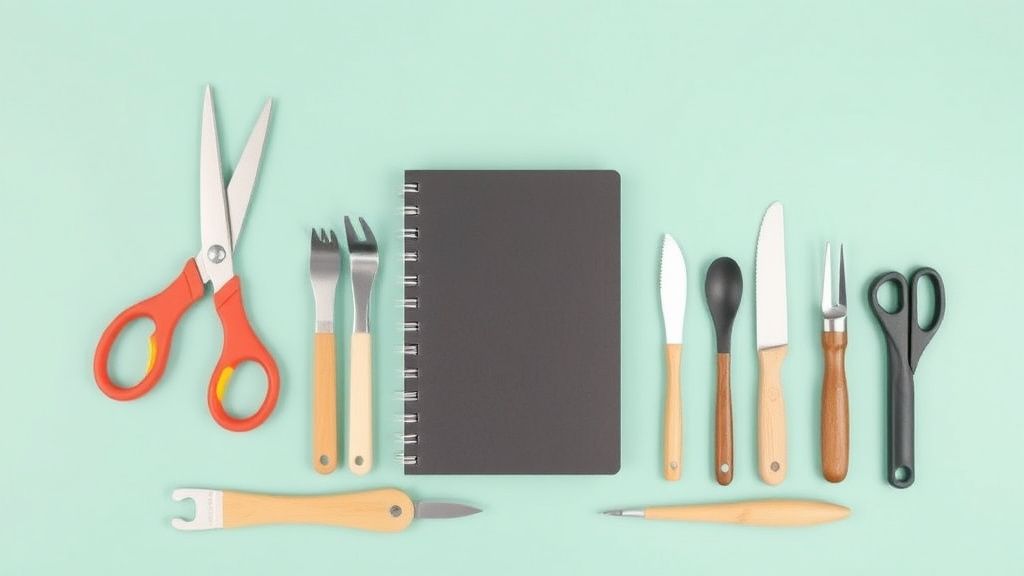
Why Left-Handed Utensils Matter
For left-handed individuals, everyday tools—especially kitchen utensils—can be a source of frustration. Right-handed designs often force lefties to adapt awkwardly, leading to inefficient cutting, scooping, or stirring. Specialty left-handed utensils are engineered to correct these issues by reversing angles, curves, and blade orientations to match natural left-handed movements. From ergonomic soup spoons to offset spatulas, these tools make cooking and eating more intuitive and comfortable.
Common Left-Handed Utensils and Their Features
Left-Handed Soup Spoons and Forks
Standard spoons and forks often have asymmetrical curves that favor right-handed users. Left-handed versions feature:
- Reversed bowl angles for easier scooping when held in the left hand.
- Balanced weight distribution to prevent tipping when lifting food.
- Textured grips for better control, especially useful for those with limited dexterity.
Left-Handed Spatulas and Turners
Right-handed spatulas often slant in a way that makes flipping pancakes or burgers awkward for lefties. Left-handed alternatives address this with:
- Offset blades angled for left-hand use, reducing wrist strain.
- Thinner, flexible edges for smoother sliding under delicate foods.
- Non-slip handles to prevent twisting during use.
Left-Handed Knives
Standard knives have beveled edges optimized for right-handed cutting pressure. Left-handed knives offer:
- Blades sharpened on the opposite side for cleaner, safer cuts.
- Ergonomic handles contoured for left-hand grip.
- Serrated edges designed for left-handed sawing motions (useful for bread knives).
Left-Handed Scissors and Kitchen Shears
Unlike ambidextrous scissors, true left-handed scissors have:
- Reversed blade orientation so the top blade is on the left, improving visibility and control.
- Finger loops shaped for left-hand comfort, reducing hand fatigue.
- Spring-assisted mechanisms for smoother cutting with less effort.
Left-Handed Measuring Cups and Spoons
Right-handed measuring tools often have markings only on one side. Left-handed versions include:
- Dual-sided measurement markings for easy reading from any angle.
- Pour spouts positioned for left-handed pouring.
- Wider bases to prevent tipping when filling.
Specialty Left-Handed Kitchen Tools
Beyond basic utensils, several niche tools cater to left-handed cooks:
- Left-handed can openers with reversed turning mechanisms for easier operation.
- Left-handed peelers with blades angled for natural left-hand motion.
- Left-handed corkscrews with spiral direction optimized for left-handed twisting.
- Left-handed graters with handles and blade angles adjusted for left-hand use.
What to Look for When Buying Left-Handed Utensils
Not all “left-handed” utensils are created equal. Here’s how to choose the best options:
- True Left-Handed Design – Avoid ambidextrous tools claiming to work for both hands; they often compromise efficiency. Look for products specifically labeled for left-handers.
- Ergonomic Handles – Handles should fit comfortably in a left-hand grip, with contours or textures that enhance control.
- Material Quality – Stainless steel, durable plastics, or reinforced silicone ensure longevity, especially for knives and spatulas.
- Blade or Edge Orientation – For knives, scissors, and peelers, verify the blade is correctly beveled or reversed for left-handed use.
- User Reviews – Feedback from other left-handed users can reveal how well a utensil performs in real-world scenarios.
Final Thoughts
Left-handed utensils aren’t just novelties—they’re practical solutions that improve comfort, safety, and efficiency in the kitchen. Whether you’re a casual cook or a professional chef, investing in properly designed tools can transform everyday tasks. From soup spoons to specialty peelers, the right utensils make all the difference for left-handed users.
If you’re new to left-handed tools, start with essentials like scissors, knives, and spatulas, then expand to niche items as needed. With the right gear, cooking and dining become effortless—just as they should be.