The Ultimate Guide to Left-Handed Stationery and Office Supplies

By Mike Southpaw · Left-Handed Tool Tester
Published June 22, 2026 · Last reviewed June 22, 2026
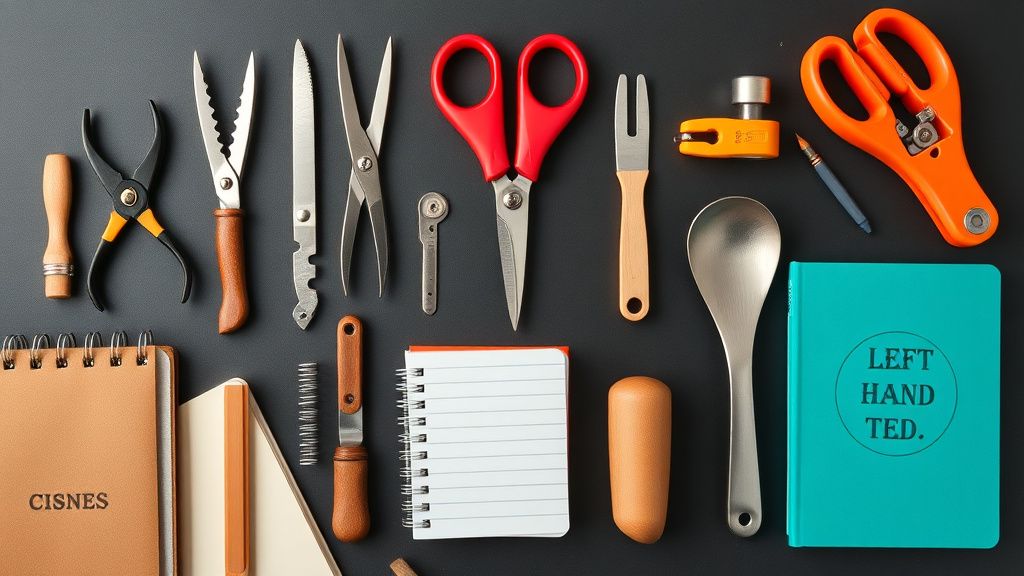
Why Left-Handed Stationery and Office Supplies Matter
For left-handed individuals, everyday tasks like writing, cutting, or using a notebook can be frustrating when tools are designed for right-handed users. Left-handed stationery and office supplies are engineered to accommodate natural hand movements, reducing strain and improving efficiency. From scissors with reversed blades to notebooks with spiral bindings on the right side, specialized products make a significant difference in comfort and performance.
This guide covers the essential left-handed office and stationery supplies, their unique features, and how they solve common problems faced by left-handers.
Left-Handed Scissors: Cutting Without the Struggle
Standard scissors are designed for right-handed users, with blades aligned to provide optimal visibility and cutting control when held in the right hand. Left-handed scissors reverse the blade orientation, ensuring clean cuts and preventing paper from bending or jamming.
Key Features:
- Reversed blade alignment – The upper blade is on the left side, allowing left-handers to see the cutting line clearly.
- Ergonomic handles – Contoured for left-hand grip, reducing hand fatigue.
- Ambidextrous vs. true left-handed – Some scissors claim to be ambidextrous but may still favor right-handed use. True left-handed scissors have fully reversed blades.
Best Uses:
- Precision cutting in crafts or office work.
- Classroom or art projects where control is essential.
Left-Handed Notebooks and Writing Pads
Spiral-bound notebooks are a common pain point for left-handers—the spiral gets in the way of writing. Left-handed notebooks flip the binding to the right side, allowing for a smoother writing experience.
Key Features:
- Right-side spiral or top-bound design – Eliminates interference with the writing hand.
- Lay-flat binding – Prevents pages from curling when writing near the spine.
- Perforated left-edge pages – Makes tearing out sheets easier without awkward angles.
Best Uses:
- Note-taking for students or professionals.
- Sketchbooks for left-handed artists.
Left-Handed Pens and Pencils
While many pens are marketed as universal, some features cater specifically to left-handers, such as quick-drying ink and smudge-resistant coatings.
Key Features:
- Fast-drying ink – Prevents smudging as the hand moves across freshly written text.
- Indented grips – Designed for left-handed finger placement to reduce cramping.
- Rollerball or gel pens – Often glide more smoothly for left-handed push strokes (unlike ballpoints, which drag).
Best Uses:
- Extended writing sessions (journaling, exams).
- Artists who need precision without smearing.
Left-Handed Rulers and Measuring Tools
Standard rulers have measurements printed from left to right, forcing left-handers to read numbers upside down or awkwardly reposition the tool. Left-handed rulers flip the scale for easy reading.
Key Features:
- Right-to-left measurement markings – Numbers are legible when held in the left hand.
- Non-slip base – Prevents shifting when drawing lines.
Best Uses:
- Drafting, technical drawing, or school projects.
Left-Handed Desk Accessories
Even small adjustments, like mouse placement or desk organizers, can improve workflow for left-handers.
Key Products:
- Left-handed computer mice – Buttons are contoured for left-hand use.
- Ergonomic keyboard layouts – Some models allow repositioning of the number pad.
- Left-handed pencil sharpeners – Blade orientation prevents uneven sharpening.
Best Uses:
- Office setups for left-handed professionals.
- Gaming or design work requiring precision.
Left-Handed Craft and Specialty Tools
Beyond basic stationery, left-handed crafters benefit from specialized tools like:
- Left-handed fountain pens – Nibs are ground to suit left-handed writing angles.
- Left-handed can openers – Reverse gear operation for easier use.
- Left-handed vegetable peelers – Blade orientation reduces slippage.
Best Uses:
- Cooking, calligraphy, or detailed craft projects.
What to Look for When Buying Left-Handed Stationery
Not all products labeled “left-handed” are equally effective. Here’s how to choose the right ones:
- Blade or Mechanism Orientation – Ensure scissors, sharpeners, or can openers are truly reversed, not just symmetrically designed.
- Ergonomics – Look for contoured grips or indents that match left-hand positioning.
- Material Quality – Smudge-resistant ink, durable binding, or non-slip bases improve longevity.
- User Reviews – Feedback from other left-handers can reveal hidden flaws or standout features.
- Purpose-Specific Design – A notebook for sketching may need heavier paper, while a writing pad should prioritize smooth ink flow.
Final Thoughts
Left-handed stationery and office supplies aren’t just niche products—they’re practical solutions that enhance comfort and productivity. Whether you’re a student, artist, or professional, investing in the right tools can transform everyday tasks from frustrating to effortless. By prioritizing ergonomics and functionality, left-handers can work and create with the same ease as their right-handed counterparts.